As world braces for ‘super’ El Niño, research suggests global warming has increased its punch
For decades, scientists have struggled to understand the potential link between global warming and El Niño — and whether human activity is making the already powerful climate phenomenon even more extreme and disruptive.
Read more LAPD internal affairs file spills more details on unit in racist recordings scandal
Evidence of a connection has remained elusive however, as El Niño is notoriously variable, making it difficult to distinguish long-term changes from its natural ebb and flow.
But now — as this year’s “super” El Niño gains strength — some researchers say they are getting closer to unraveling the mystery.
A study published recently in the journal Science examines temperature data from more than 900 years of coral records from the Galápagos, and suggests that El Niños have become much stronger since people started warming the planet through fossil fuel emissions.
“Prior to the Industrial era, we don’t see evidence for periods where the El Niño system is as strong as it is in the most recent decades,” said Julia Cole, a paleoclimatologist at the University of Michigan and the study’s lead author. The swings between warm and cold conditions that define El Niño “were much stronger in the last 40 to 50 years than they were prior to warming.”
The research arrives as experts and officials warn that the current El Niño, which began forming in June, is shaping up to be the strongest ever experienced by a considerable margin. It is developing faster than the previous historic “super” El Niños of 1997-98 and 2015-16, and is already on track to far exceed historic temperature thresholds.
On Thursday, the World Meteorological Society issued a new El Niño forecast warning that there is a nearly 100% chance it will continue through February, prolonging its effects.
“El Niño is being supersized before our eyes,” read a statement from United Nations Secretary-General António Guterres. “The science leaves no room for doubt: the planet is in uncharted waters, and those waters are heating up. Sea surface temperatures are rising, temperatures keep climbing, and the world is in the danger zone of extreme weather.”
El Niños are periods of temporary warming in the tropical Pacific that develop every two to seven years. When they arrive, they trigger widespread changes in weather and climate around the world, from punishing heat waves to dangerous floods and severe droughts. In Southern California, El Niño is associated with warm and wet conditions.
According to authors of the recent study, modern El Niños are about 36% stronger than they were before the start of the industrial era in the mid-1800s, and show a “striking amplification” of about 16% in the last 40 years. El Niño’s strength is primarily measured by how much warmer the sea surface temperature in the tropical Pacific region is than normal.
To be sure, scientists have not yet conclusively established that humanity’s burning of fossil fuels is increasing or intensifying El Niño.
“This is another piece of evidence in an ongoing scientific debate on the role of climate change in El Niño events,” said Zeke Hausfather, a climate scientist at Berkeley Earth who was not involved in the study. “It won’t necessarily settle it, but it’s more weight on the side of the scale for a detectable climate impact.”
The ramifications of a direct connection would be serious. Not only is El Niño a leading driver of climate and weather hazards, but it imposes “tremendous economic costs, ecological damages, and human suffering globally,” according to the Science study. That includes droughts, floods, infrastructure damage, coral bleaching, wildfires, and agricultural and health effects.
Notably, the study did not find that climate change is worsening the other half of the El Niño Southern Oscillation System — La Niña. If anything, it is making ENSO’s variability “kind of lopsided,” Cole said, meaning that the change in variability leans toward stronger warm events than cold ones.
Uncovering these mechanisms has been a challenge, she said, in part because very few people live in the remote part of the ocean where El Niño forms, and “nobody was out there sticking a thermometer in the water every week” over the centuries to create a historical record. It wasn’t until scientists started receiving satellite data in the 1980s that a complete picture of El Niño began to emerge.
Read more Nithya Raman is the comeback kid of L.A. politics
So Cole and her colleagues turned to the coral.
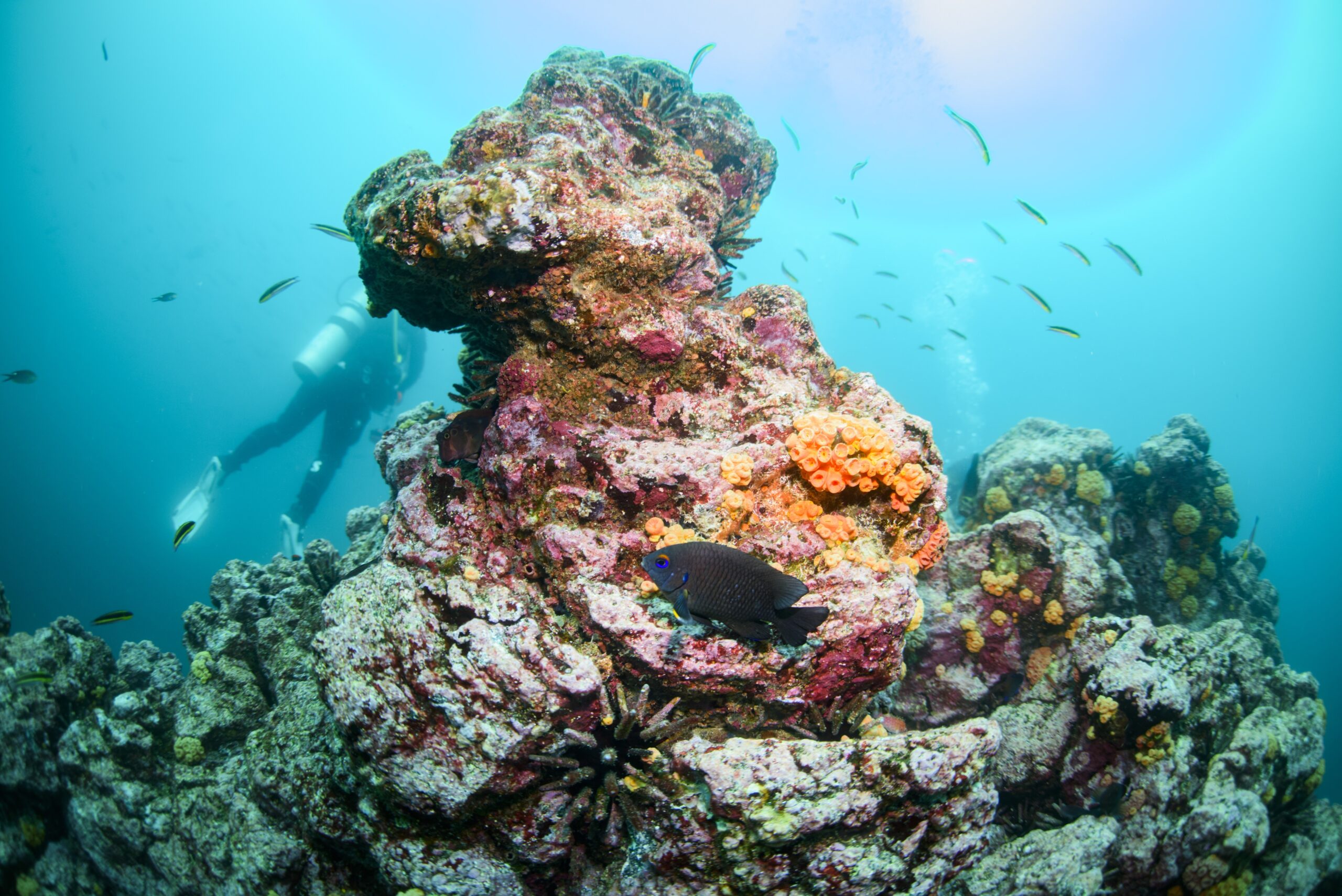
Coral can live for decades or centuries, and they form a skeleton of calcium carbonate layers as they grow, kind of like rings on a tree. By measuring aspects of their chemistry — the ratio of strontium to calcium and the relative abundance of rare and common oxygen isotopes — the researchers could determine the ocean temperature in which the coral grew down to a specific month, Cole said.
That allowed them to chart temperature data from the Galápagos dating back almost 1,000 years. The Galápagos sit right where Eastern Pacific El Niño events have some of their strongest effects.
Though they didn’t have coral samples for every year of the last millennium, the data they generated “have this really unequivocal signal in them, and we thought it was really important to get them out there,” Cole said.
The findings may not settle the debate once and for all, but they “definitely” show an increase in El Niño’s variance in the modern era, said Art Miller, an oceanographer at Scripps Institution of Oceanography who was not involved with the study.
He said the findings are consistent with the appearance of several unusually large El Niño events in the last three decades — namely, 1997-98, 2015-16 and the one gaining strength now.
They also align with observable warming in the ocean and atmosphere, which are potentially affecting El Niño’s dynamics, he said. In fact, this year’s El Niño is developing against the backdrop of unusually warm ocean temperatures, including a record-breaking marine heat wave in the Pacific Ocean that is providing a hotter baseline for the system.
“Since the equatorial zone of the ocean in the western Pacific was loaded with heat, it was primed for triggering an El Niño,” Miller said. But the connection is something of a two-way street: Although the heat wave helped instigate El Niño in the spring and summer, El Niño is expected to feed warmth back toward the West Coast as it develops, keeping coastal waters warmer than usual in the fall and winter, he said.
Other researchers were more skeptical about the coral study’s findings. University of Pennsylvania climate scientist Michael Mann noted in a post on Bluesky that other factors, such as volcanic and solar activity, could explain patterns seen in the coral record.
For his part, Hausfather cautioned that there are “pretty big uncertainties when you are working with indirect measurements like coral proxy records,” so comparing historic El Niños to modern ones is inherently hard to do.
What’s more, “even if the authors are correct about the climate change link, that doesn’t mean that every single El Niño event will be a strong one,” he said. “El Niño is still largely driven by natural variability, which means that some individual events will be strong and some weak.”
Cole, the lead researcher, agreed. The findings don’t mean that every El Niño will be stronger than the last in a warming world, she said — nor would that be realistic given how unpredictable El Niño can be.
But even if some are weaker than others, the data indicate they are unlikely to revert to preindustrial levels anytime soon, she said. The coral records show essentially “no overlap” in El Niño’s behavior between the modern era and the time before human-caused global warming, she said.
“There’s all kinds of ways that El Niño can change,” Cole said. “But this current strong event is consistent with the shift that we saw that says big strong events are going to be more common.”
Read more Missouri high court blocks Trump-backed congressional map, orders it be put to a vote
