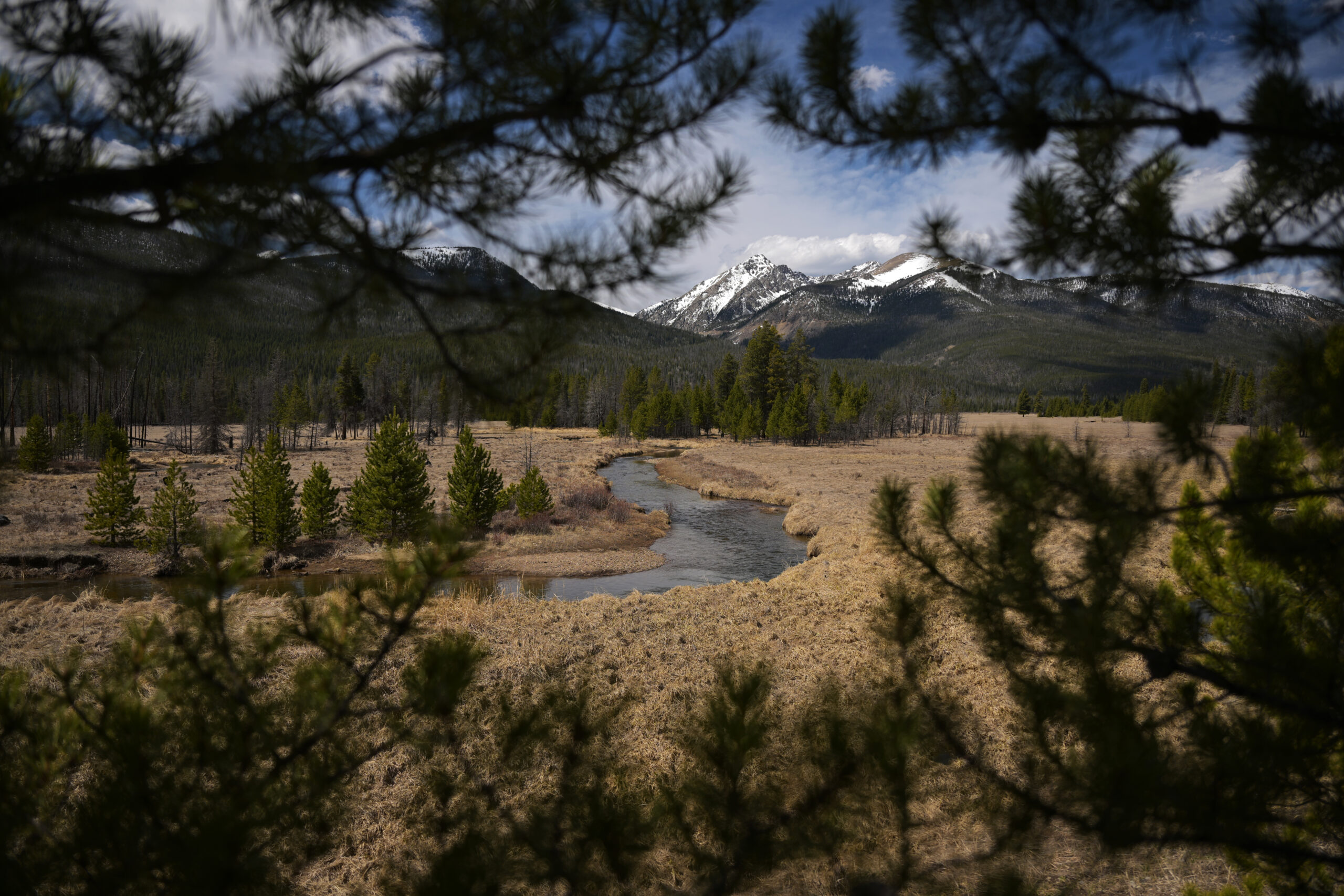
A dire ‘math problem’ on the Colorado River and wholly inadequate responses
Among the leading experts who study the Colorado River, Anne Castle stands out.
During the Obama administration, she was assistant secretary for water and science at the Interior Department. During the Biden administration, she served on the Upper Colorado River Commission. She is now a senior fellow at the University of Colorado Law School Getches-Wilkinson Center.
Read more 200,000 Californians help the grid out in tough times and get paid for it. Now that’s up in the air
So when I was moderating an online panel last week, I thought Castle would be the ideal person to answer this question: How far are western states’ leaders from really addressing the Colorado River crisis?
Her answer: Nowhere near.
Last year, the total water used (plus water lost to evaporation) was 3 million acre-feet more than what the river actually carried. That’s possible because the region is drawing heavily from the Colorado’s giant reservoirs, where water levels are dropping.
How much is that overdraft? It’s nearly as much as all the water that flowed from 19 million people’s taps across Southern California last year.
“This year, there’s going to be even less water available,” Castle said.
Indeed, there is so little snow in the Rocky Mountains that this spring and summer, the runoff reaching Lake Powell, the nation’s second largest reservoir, is expected to be just 13% of average, the lowest on record. That’s according to the latest .
Lake Powell is now just 24% full, so low that the Trump administration is taking emergency measures, releasing extra water from another reservoir upstream to raise the lake level.
“That’s just a one-time fix. It helps us this year, but it doesn’t do anything to solve the gap between supply and demand,” Castle said. “We haven’t solved the gap.”
To address the shortage, she said, seven western states really need to cut water usage between 3 million and 4 million acre-feet per year — one-fourth or more of the region’s total annual water use.
Negotiators for California, Arizona and Nevada have offered to use roughly 1.6 million acre-feet less annually over the next two years.
“It’s a step in the right direction, no doubt about it, but it’s not enough. And the river will make us use less water eventually,” Castle said.
In Southern California, cities get nearly one-fourth of their water from the Colorado.
During the webinar organized by the UCLA Luskin Center for Innovation, other experts and state officials agreed that the responses to date are insufficient to deal with the river’s long-term “math problem.”
The 1922 agreement that divided the water among the states doled out more than was actually flowing, and since 2000, the river has shrunk dramatically as climate change intensifies dry conditions in the Rocky Mountains.
Representatives of seven western states have deadlocked in negotiations on how to cut water use, with the disagreements pitting three downstream states — California, Arizona and Nevada — against the upstream states of Colorado, Wyoming, Utah and New Mexico. The four upper states have called for a mediator to try to break the impasse.
“The gap we have to fill is 3 to 4 million acre-feet, and I want to suggest that that can only happen if there are mandatory, enforceable reductions in every state,” Castle said. “It’s just not possible, either mathematically or politically, to solve that problem without all seven states.”
Read more 3 ads that explain California politics
She said she thinks water managers at the federal Bureau of Reclamation should “stretch to the limits of their authority, do what they need to do, to ensure that the reservoirs don’t go dry.”
Downsizing agriculture’s water footprint will be critical, Castle said, because farms use about three-fourths of the water, much of it to grow alfalfa and other kinds of hay to feed cattle.
“I don’t know that conservation in the ag sector is going to be sufficient,” she said. “I think very unfortunately, there are ag lands that are going to go out of production.”
More water news
Over the last few years, federally funded water-saving efforts along the Colorado River have including paying farmers who volunteer to leave hay fields dry part of the year. This week, a coalition of water agencies, agriculture organizations and environmental groups urging them to approve at least $2 billion more for a “near-term drought mitigation program.” They say federal investment will be critical to help close the huge water gap.
It’s not just along the Colorado River. About 60% of the country is now experiencing some level of drought, according to the U.S. Drought Monitor. And in Corpus Christi, Texas, the severe drought has caused such dramatic declines in reservoirs that residents and businesses may be required to cut water use 25% under a proposed city emergency plan, Alex Nguyen and Colleen DeGuzman report for the Texas Tribune.
In Utah, the developers of a proposed hyperscale data center withdrew their water permit application after nearly 4,000 people filed protests, citing concerns about the project’s potential effects on the Great Salt Lake, Leia Larsen reports for the Salt Lake Tribune.
Here in California, my L.A. Times colleague Taryn Luna and I reported on a speech by Gov. Gavin Newsom, who offered a wide-ranging look back at his water policies since taking office. Newsom said his administration is “moving forward aggressively” on a plan to build a giant tunnel beneath the Sacramento-San Joaquin River Delta to replumb the state’s water system. But the tunnel’s fate could rest with the next governor as well as large water agencies that have yet to decide whether to pay for it.
More climate and environment news
Marta Segura, the first chief heat officer for the city of Los Angeles, was quietly fired from her position last month, my colleague Hayley Smith reported for The Times. Segura’s dismissal was first reported by Sammy Roth on his Substack Climate-Colored Goggles. Officials with the Bass administration said they are in the process of appointing a new person to the role, and extreme heat is one of L.A.’s most dangerous climate hazards.
California legislators are considering a bill that would overhaul management of 14 state demonstration forests, shifting priorities away from commercial logging. The proposal grew out of a grassroots effort to protect North Coast redwoods, where tribes are seeking a role in overseeing their ancestral homelands, my colleague Lila Seidman reports for The Times.
Over the last 20 years, scientists have documented an increasing number of juvenile great white sharks cruising waters off Southern California beaches. L.A. Times reporter Clara Harter tagged along with scientists in a boat as they tracked the predators, and wrote about what experts think is behind the ongoing shark surge.
One more thing
For those who live in Los Angeles, have you been waiting for an opportunity to watch the award-winning documentary Out of Plain Sight, directed by Daniel Straub and my colleague Rosanna Xia? The film is a brilliant cinematic expansion of Xia’s reporting on the legacy of toxic dumping off the coast of Southern California. It recently won the best investigation award at Santiago Wild, the most prominent environmental film festival in Latin America.
There will be a special screening at the Hammer Museum next Thursday, May 21, at 7:30 p.m. Admission is free and seats are assigned on a first come, first served basis. After the screening, Xia will join a conversation with UCLA Design Media Arts Professor Rebeca Méndez and Professor Elizabeth DeLoughrey from UCLA’s Institute of the Environment and Sustainability.
This is the latest edition of Boiling Point, a newsletter about climate change and the environment in the American West. Sign up here to get it in your inbox.
For more water and climate news, follow Ian James @ianjames.bsky.social on Bluesky and @ByIanJames on X.
Read more Vance says $1.3 billion in Medicaid payments to California will be deferred over fraud concerns
