Los Angeles tries again to phase out urban oil production
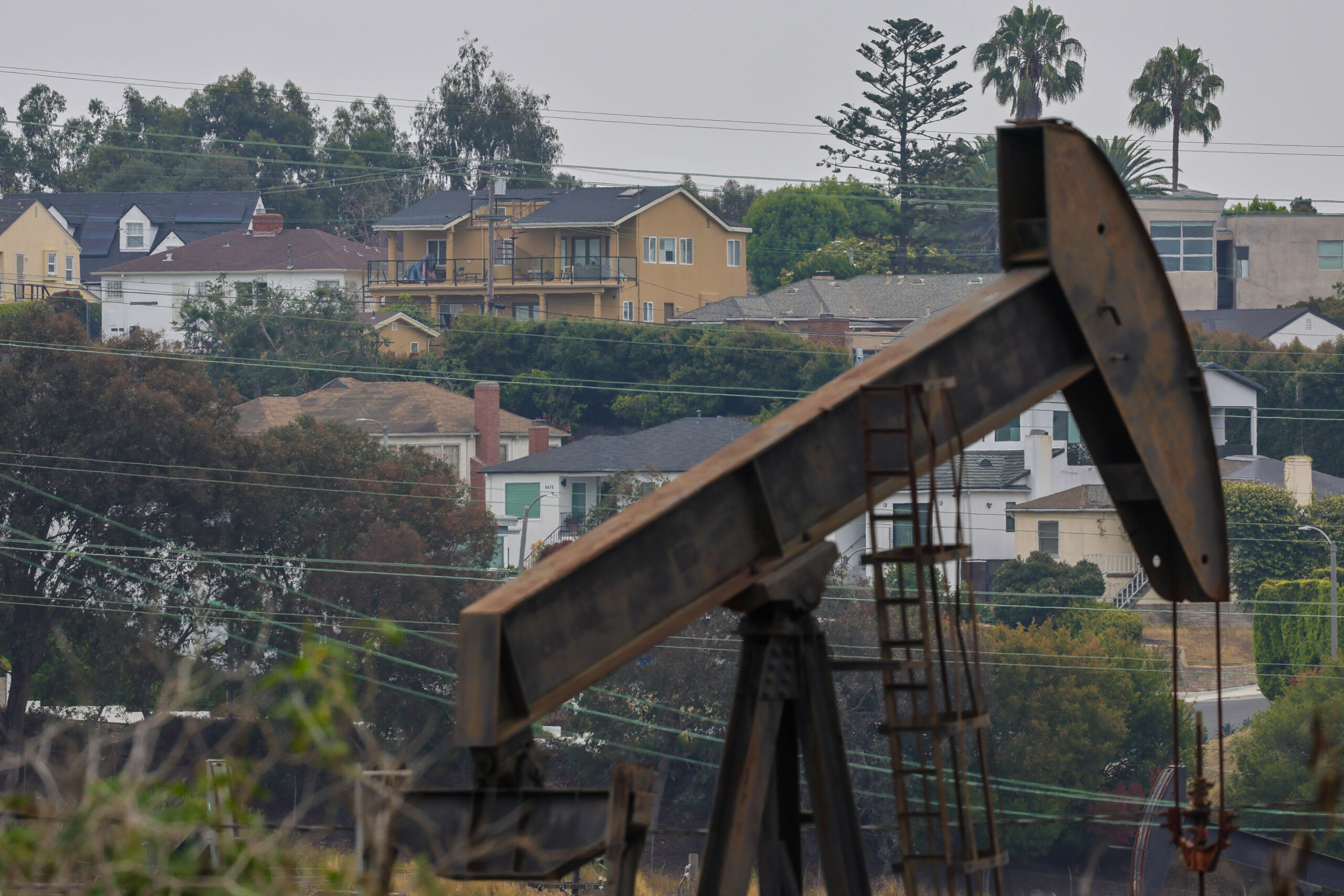
The Los Angeles City Council on Tuesday unanimously advanced an ordinance to halt new oil and gas drilling and phase out all existing production over the next 20 years. L.A. is home to more than 2,000 active oil wells.
Read more Democrats want California voters to give them more flexibility over spending
The measure revives a similar ban passed in 2022, which was struck down by a judge following legal challenges from the oil and gas industry.
It must pass a second vote before final adoption later this summer, and would make L.A. the largest city in the United States to phase out existing oil wells.
“Today, Los Angeles is making a decision that aligns with our need to turn the page on urban oil drilling,” Councilmember Katy Yaroslavsky said during Tuesday’s council meeting. “The absence of an enforceable oil ordinance has had real consequences for our communities.”
The ban in 2022 was seen as a historic move for a region built on the petroleum industry.
But in 2024, a Los Angeles County Superior Court judge invalidated the law, ruling that the state, not the city, has jurisdiction over petroleum production. The legal challenge was brought by oil companies including Warren Resources, which operates a large oil field in Wilmington. Much of the field is beneath the city of Long Beach, but it also extends under Los Angeles.
Shortly after that, state legislators advanced Assembly Bill 3233, which reaffirmed city and county authority to regulate oil and gas activity. It was largely seen as the missing piece that made the original ordinance vulnerable.
“It’s now unequivocal that cities have the authority to regulate, limit and prohibit oil and gas operations within our jurisdiction,” Yaroslavsky said.
Read more The other anti-data center movement: California’s sky-high electricity prices
The new , written by the Department of City Planning, prohibits new oil and gas extraction, including drilling, redrilling or deepening existing oil wells for the purposes of production. It also designates all existing and active idle wells as “nonconforming uses,” meaning they may only operate during the phaseout period and are no longer compliant with current zoning.
Warren Resources, which led the lawsuit against the previous ban, did not immediately respond to a request for comment. The company previously argued that the 2022 ban was rushed and would lead to more oil imports to the area, causing increased emissions from tankers and trucks and other environmental consequences.
Many wells in the city operate near schools, homes and parks. Most are concentrated in low-income areas and communities of color, such as Wilmington and the harbor district, West L.A. and South L.A., where residents have long reported respiratory issues, headaches, throat irritation and other health problems. Studies have found oil wells can emit carcinogens and are linked to adverse health effects.
“This ordinance is such an important step toward giving every frontline community in Los Angeles access to clean air,” Silvia Esparza, a South L.A. resident and member of environmental justice group Stand-L.A., said in a news conference ahead of Tuesday’s vote.
Ashley Hernandez, a Wilmington resident and organizer with the nonprofit Communities for a Better Environment, said bloody noses and noxious fumes were a regular part of life in the neighborhood growing up.
She noted that in addition to oil drilling, L.A. residents continue to face other environmental hazards, such as the recent oil pipeline rupture that sent crude into the L.A. River or the ongoing cold storage warehouse fire in Boyle Heights that is spewing toxic smoke.
“I’m here to remind L.A. city and these toxic neighbors that Wilmington residents are more important than any ‘black gold’ under their homes,” Hernandez said. “We need our city to protect our families now and to stop the oil industry’s reign of power in our city. A passage of the oil phaseout ordinance today gives the city a chance to correct this wrong.”
Read more Battle over single-use plastics erupts as 17 states move to block California law
Times staff writer Dakota Smith contributed to this report.
