EPA touts crackdown on smuggled pesticides in L.A. visit
The U.S. Environmental Protection Agency is ramping up its enforcement of illegal pesticides smuggled through the ports of Long Beach and Los Angeles, officials said during a visit to L.A. on Thursday.
Read more In California governor’s race, voters face stark choice on immigrant healthcare
Since President Trump began his second term in January 2025, EPA has blocked more than 2.4 million pounds of illegal pesticides from entering the country, said Lee Zeldin, the agency’s administrator. Much of it comes from China, but some comes from Mexico and, on the East Coast, from Africa.
“We’re very alarmed by any chemical that anyone would seek to bring into this country that our own government hasn’t had the opportunity to vet, to research to fully understand,” Zeldin said. “That’s why it’s so important that these products get stopped at the border.”
The announcement came just hours after the Supreme Court handed a major victory to the makers of the weedkiller Roundup, shielding it from thousands of lawsuits from states alleging the company failed to warn people the product could cause cancer.
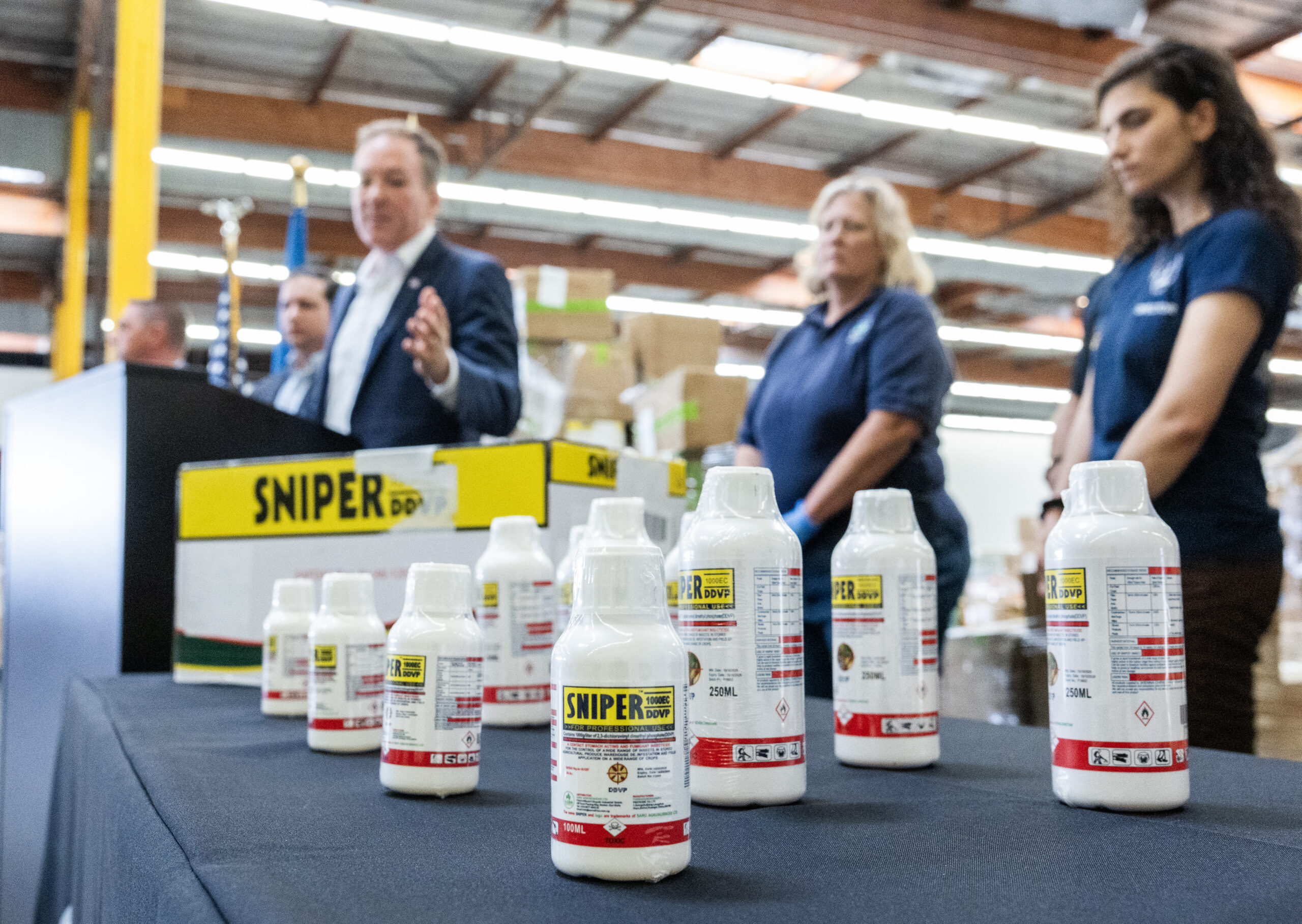
Speaking from a U.S. Customs and Border Protection warehouse in Carson, Zeldin pointed to a white bottle with a yellow label reading “SNIPER” — an illegal pesticide product commonly imported from abroad and sold online — that was recently intercepted at the Port of L.A. complex. Sniper contains dichlorvos, or DDVP, a highly toxic insecticide that is not registered or approved for use in the U.S. It is known to cause neurological problems, convulsions and comas, with children particularly at risk.
Illegal pesticides are cause for concern in California, where they are often associated with illegal cannabis operations. Last year, Siskiyou County declared a local emergency in response to the “escalating threat” posed by illegal pesticides, often fumigants, in illicit cannabis operations.
“These chemicals, when burned, create thick, poisonous smoke that presents serious risks to public health, the environment, waterways, and first responder safety,” the county said.
A 2024 Los Angeles Times investigation found that contraband Chinese pesticides used on cannabis farms is a growing problem in the state.
Much of the illegal product comes through the ports of L.A. and Long Beach, which together handle more than 30% of the nation’s container traffic, officials said. EPA works closely with Border Patrol officials, who flag suspicious cargo containers at the port for further inspection.
Read more Newsom blesses Uber ballot measure truce — but fight over car crash lawsuits continues
CBP spokesman Jaime Ruiz said the agency is using artificial intelligence tools to help scan incoming cargo manifests for potentially illegal items. Thousands of containers are flagged for inspection each year, although that number also includes drugs, counterfeit goods and other contraband in addition to pesticides, he said. He could not immediately say what percentage were illegal pesticides.
Illegal pesticides have at times been found in California agriculture and the California Department of Pesticide Regulation has taken enforcement action against violators. The DPR operates one of the nation’s largest pesticide residue testing programs, analyzing some 3,500 produce samples each year from wholesale and retail stores and other outlets. The state produces about half of the nation’s fruits and vegetables.
Jeff Hall, assistant administrator of EPA’s Office of Enforcement and Compliance, said the issue should be bipartisan.
“We cannot allow foreign actors to profit by sending toxic and poisonous products into the United States and poisoning American communities,” he said. “This is a message that we should all be able to agree on, especially for pesticides.”
However, the agency’s visit to L.A. arrived at a fractured moment for U.S. pesticide regulation and for the Trump-aligned Make America Healthy Again movement.
On Thursday, the Supreme Court ruled 7-2 in favor of Bayer’s Monsanto, the maker of the powerful weedkiller Roundup, shielding it from thousands of state lawsuits that allege the company failed to warn people the product could cause cancer.
Roundup contains glyphosate, which was classified by the World Health Organization as “probably carcinogenic” in 2015. But the Supreme Court found that the company can’t be sued in state courts because federal agencies — including the EPA — have determined that it’s not likely to cause cancer in humans when used as directed. The EPA has repeatedly approved a label for the product without a cancer warning.
“When people are exposed to pesticides, they deserve honest warnings about the risks,” said Bill Jordan, former deputy director of EPA’s Office of Pesticide Programs, in a statement. “The Court’s decision leaves families, workers, and communities with fewer tools to protect themselves and to recover damages when they are injured by a pesticide.”
Read more Controversial billionaire tax proposal will appear on November ballot