How Google’s 32-million mosquito project could change California’s battle against dengue
Google took internet searches to the next level. Could it do the same for mosquito control?
Read more Endangered sheep dies after getting entangled in razor wire at the border, biologist says
The Silicon Valley-based tech giant is seeking to release up to 64 million sterilized male mosquitoes in California and Florida over two years, according to a . It’s part of an ambitious effort to curb the diseases the insects spread.
Google says it can harness technology to optimize a concept that’s been around for decades, but hasn’t been successfully scaled with mosquitoes to rein in disease.
For example, the process often involves separating the insects by sex to isolate the males. Currently, that’s done manually and can be time consuming. Google says it’s “developing new technologies that combine sensors, algorithms and novel engineering to take advantage of unique aspects of mosquito biology to quickly and accurately sort males from females.”
The company also says it’s building software and monitoring tools to guide releases of sterile males, and its scientists and engineers are creating sensors, traps and software to decide which areas need to be treated and treated again.
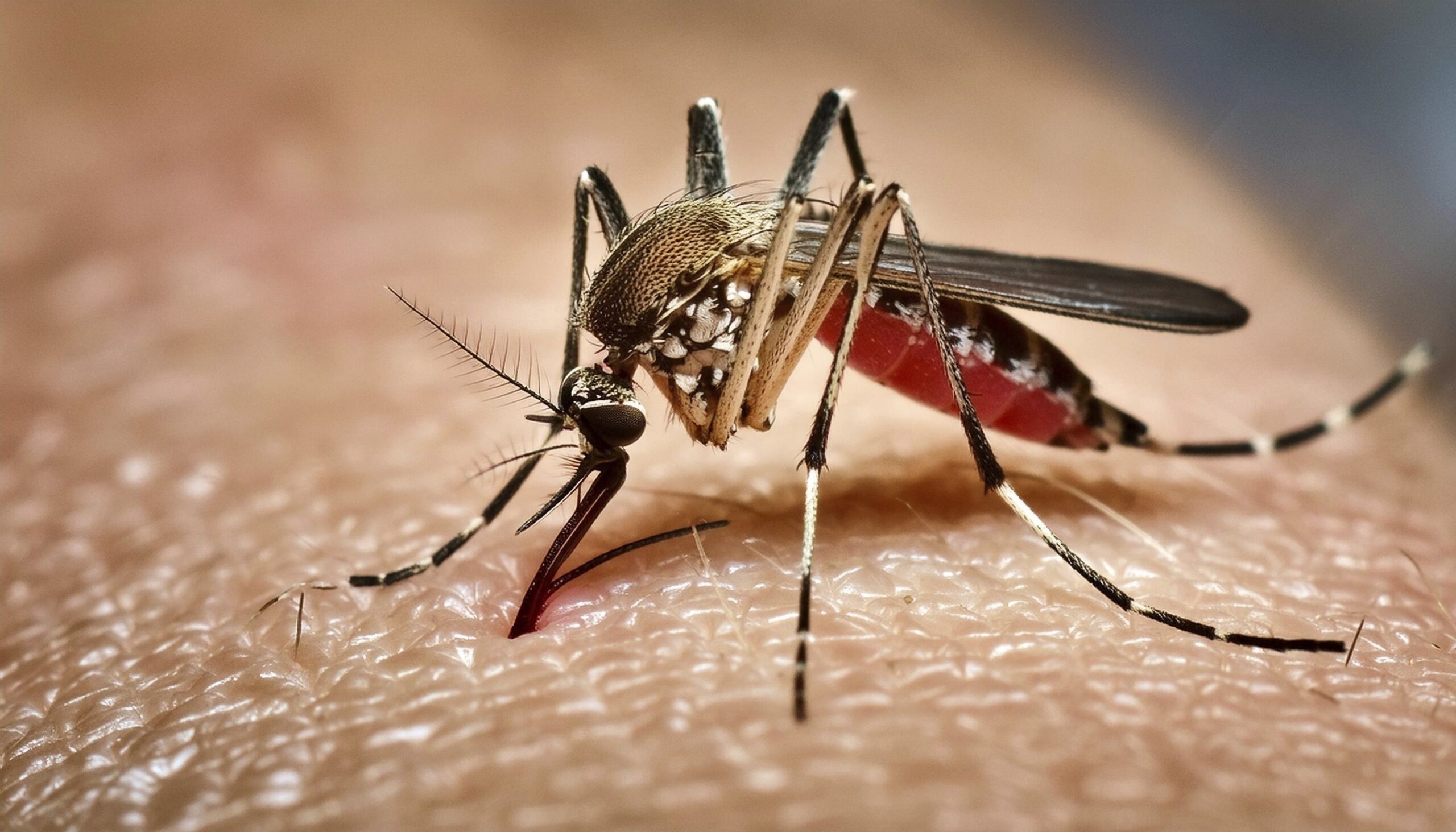
Called Debug, the project targets Aedes aegypti mosquitoes, which are native to Africa but have infiltrated since first being detected in the state in 2013. Not only do they drive residents nuts with itchy bites, but they can carry a number of potentially serious diseases, including dengue, Zika, chikungunya and yellow fever.
The plan is to infect males — which don’t bite — with a bacteria called Wolbachia, which effectively renders them sterile. They are then released to seek out wild females and mate. Females will lay eggs but these won’t hatch, which experts say drives down the population over time.
There are other methods to sterilize male mosquitoes. Vector control districts serving Los Angeles, Orange and San Bernardino counties have irradiated males and released them in recent years.
Early results are promising. Two neighborhoods treated by the Greater Los Angeles Vector Control District saw a more than 80% reduction in the female Aedes aegypti population in 2024 and 2025.
But as the Greater L.A. district seeks to expand its operations, cost poses a problem. Last year, business owners signaled they weren’t willing to shell out more every year to make it happen. District officials are still hoping to sway them.
Read more Bass clears first hurdle, but if Pratt holds off Raman, the mayoral race could be a holy war
If Google moves forward, it wouldn’t be the first time it has been involved in such an effort. In 2018, the company conducted a large-scale trial in Fresno County, releasing 14.4 million Wolbachia-infected males in three neighborhoods.
“At peak mosquito season, the number of female mosquitoes was 95.5% lower in release areas compared to non-release areas, with the most geographically isolated neighborhood reaching a 99% reduction,” a 2020 paper reported.
Google has applied for a permit from the Environmental Protection Agency to carry out the releases in California and Florida, for which the federal agency is currently seeking comments before deciding whether to grant approval.
The company aims to release up to 16 million Wolbachia-infected males in California, and the same in Florida, per year for two years, the Federal Register announcement said, for a total of 64 million.
Urgency to tamp down the invasive mosquito population in California has increased since 2023, when the state logged its first locally acquired dengue cases — meaning people were infected in their communities, not while traveling. The following year, the number of locally acquired cases ballooned to 18, with 14 of them in Los Angeles County.
A study published last week in “The Lancet Regional Health — Americas” found that approximately 18.2 million Californians — primarily in the Central Valley, L.A. and San Diego areas — live in regions where conditions are probably suitable for local dengue transmission.
“Under moderate scenarios of climate warming and urban expansion, an additional 4.1 million residents may be at risk by mid-century,” according to the study led by UC Berkeley’s Lisa Couper. Researchers note the current and future risk of transmission remains low except during summer in the Central Valley and Southern California.
“I’m pretty much in favor of whichever [sterile insect technique] approach gets us the disease prevention and nuisance control we need and at the lowest price,” Susanne Kluh, general manager of the Greater L.A. County Vector Control District, said in an email.
She said her district went with radiation because it was the only approved technique when they wanted to launch their pilot, and that it’s “also the only one where some company does not make a profit in the middle.” However, she wouldn’t rule out using Wolbachia if it turned out to be the most affordable option.
Read more Hilton and Becerra lead California’s unsettled governor’s race; Steyer faces elimination
